No products in the cart.: $0.00

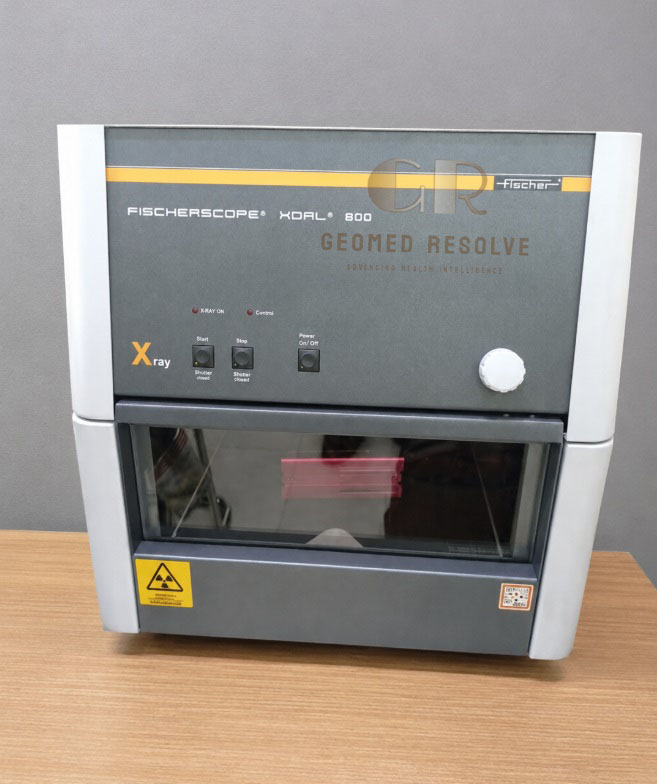
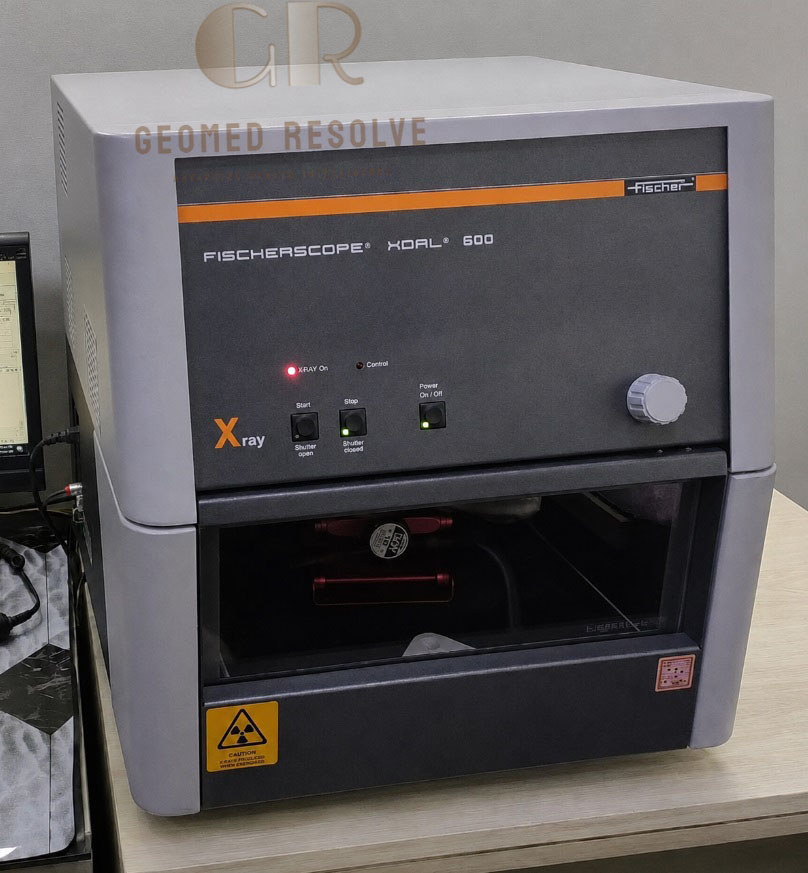
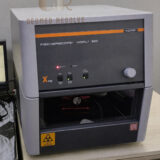
FISCHERSCOPE XDAL 600 Benchtop XRF Analyzer
The FISCHERSCOPE XDAL 600 Benchtop XRF Analyzer is a professional non-destructive measurement system for coating thickness and material analysis. Featuring a 20 mm² Silicon Drift Detector, DPP+ processing, interchangeable apertures and filters, and a manually adjustable sample table, it is designed for thin coatings, multilayer systems, alloys, trace elements and RoHS inspection.
Description
FISCHERSCOPE XDAL 600 Benchtop XRF Analyzer – Precision Coating Thickness Measurement & Material Analysis System
The FISCHERSCOPE XDAL 600 is a professional benchtop X-ray fluorescence (XRF) analyzer designed for precise, non-destructive coating thickness measurement and material analysis.
The instrument is particularly suitable for analyzing thin and very thin coatings, multilayer systems, alloys and trace elements. According to Helmut Fischer, the XDAL 600 can measure coatings down to approximately 0.1 µm and is also suitable for material analysis, including RoHS screening.
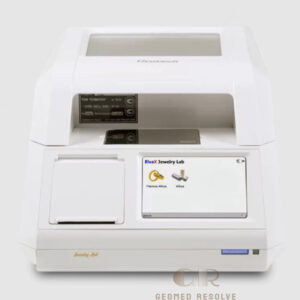
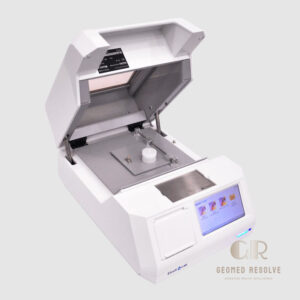
Its compact benchtop design features a manually adjustable sample table, configurable apertures and filters, a silicon drift detector, microfocus X-ray tube and Fischer’s DPP+ digital pulse processing technology.
Main Benefits
Non-destructive XRF coating thickness measurement
Precise analysis of thin and very thin coatings
Material and alloy analysis
Trace-element analysis
RoHS screening capability
Silicon Drift Detector technology
DPP+ digital pulse processing
Adjustable measurement spot
Four interchangeable apertures
Three interchangeable primary filters
Manual sample positioning
Top-down measurement configuration
Suitable for complex sample geometries
Compact benchtop design
WinFTM measurement and evaluation software
Key Features
XRF Coating Thickness Measurement
The XDAL 600 is designed for non-destructive measurement of thin coatings, making it useful where samples cannot be cut, damaged or destroyed during inspection.
It can be used for applications involving:
Gold coatings
Nickel coatings
Copper coatings
Palladium coatings
Precious-metal coatings
Electronic contacts
Functional coatings
Multilayer systems
Fischer specifies the XDAL 600 for coating thickness measurement down to approximately 0.1 µm.
Silicon Drift Detector
The XDAL 600 uses a 20 mm² Silicon Drift Detector (SDD) for high-quality XRF analysis of thin coatings and materials. Fischer’s product information identifies the SDD as a key component for precision analysis.
DPP+ Digital Pulse Processing
The DPP+ digital pulse processor increases counting rates and can significantly reduce measurement time while maintaining measurement capability compared with conventional DPP processing.
Interchangeable Apertures
The XDAL 600 provides four interchangeable apertures, allowing the measurement configuration to be matched to different sample sizes and analytical requirements.
Published Fischer information lists selectable spot sizes in the approximate range of Ø0.1–3 mm, depending on configuration.
Interchangeable Filters
The system provides three interchangeable primary filters, allowing measurement conditions to be optimized for different coating and material-analysis applications.
Manual Sample Table
The XDAL 600 uses a manually adjustable shear/sample table, making it convenient to position medium and larger components as well as samples with complex geometries.
Variable Measurement Distance
The instrument supports variable measurement distance. Fischer specifies a measurement distance of approximately 0–80 mm, with an ideal working range of approximately 0–15 mm.
Key Specifications
Brand: Helmut Fischer
Model: FISCHERSCOPE X-RAY XDAL 600
Product Type: Benchtop XRF Analyzer
Technology: Energy Dispersive X-Ray Fluorescence (EDXRF)
Primary Applications: Coating thickness measurement and material analysis
Detector: Silicon Drift Detector (SDD), 20 mm²
Measurement Direction: Top-down
Coating Thickness Capability: Up to approximately ≤0.1 µm, depending on coating/material system
Measurement Spot: Approximately Ø0.15–3 mm depending on configuration
Published Aperture Options: Approximately Ø0.1, Ø0.3, Ø1 and Ø3 mm
Primary Filters: 3 interchangeable
X-Ray Tube: Microfocus tube with tungsten anode
Measurement Distance: 0–80 mm
Ideal Measurement Distance: 0–15 mm
Sample Height: Up to approximately 140 mm
Sample Table: Manual adjustable shear table
Processing: DPP+ digital pulse processing
Software: WinFTM
Analysis: Thin coatings, multilayers, alloys, trace elements and RoHS applications
Applications
The FISCHERSCOPE XDAL 600 is suitable for:
Coating thickness measurement
Electroplating quality control
Electronics manufacturing
Semiconductor production
Connector inspection
Lead-frame analysis
PCB and electronic component inspection
Precious-metal coating analysis
Gold coating measurement
Nickel coating measurement
Multilayer coating analysis
Alloy identification
Trace-element analysis
RoHS screening
Quality-control laboratories
Typical Materials & Coatings
Depending on the calibration and application setup, the XDAL 600 can be used for analysis of:
Gold
Silver
Palladium
Platinum
Nickel
Copper
Zinc
Tin
Chromium
Lead
Other coating and alloy materials
What is the FISCHERSCOPE XDAL 600 used for?
The XDAL 600 is primarily used for non-destructive coating thickness measurement and material analysis, particularly for thin coatings, multilayer systems and electronic components.
Is the XDAL 600 an XRF analyzer?
Yes. It is an energy-dispersive X-ray fluorescence (EDXRF) benchtop analyzer.
How thin a coating can it measure?
The XDAL 600 is designed for coatings down to approximately 0.1 µm, depending on the coating/substrate combination and calibration.
Does it use a Silicon Drift Detector?
Yes. The XDAL 600 uses a 20 mm² Silicon Drift Detector.
Can it perform RoHS analysis?
Yes. Fischer identifies the XDAL 600 as suitable for material analysis including RoHS screening.
Can it measure multilayer coatings?
Yes. The XDAL series is designed for analysis of complex multilayer systems as well as thin and very thin coatings.
What industries use the XDAL 600?
Typical applications include electronics, semiconductors, electroplating, precious metals, gold, jewelry and watch manufacturing.