
No products in the cart.: $0.00

How to Choose the Right Industrial 3D Scanner
The Right Industrial 3D Scanner for Your Business | Complete Buying Guide (2026)
Industrial 3D scanners have become essential tools across modern manufacturing, aerospace, automotive, energy, medical, and engineering industries. Whether you need precise quality inspection, reverse engineering, rapid prototyping, or digital archiving, selecting the right industrial 3D scanner can significantly improve productivity, accuracy, and return on investment.
With many technologies available—including laser scanning, structured light scanning, handheld scanners, and metrology-grade systems—choosing the best solution depends on your application, accuracy requirements, scanning speed, portability, and budget.
This guide explains everything you need to know before investing in an industrial 3D scanner and highlights several professional systems trusted by manufacturers worldwide.
Why Invest in an Industrial 3D Scanner?
Industrial 3D scanners help companies:
Improve dimensional inspection
Accelerate product development
Reduce manufacturing errors
Create accurate CAD models
Simplify reverse engineering
Perform non-contact measurements
Digitize complex parts
Reduce production costs
Compared with traditional measurement methods, modern handheld 3D scanners provide faster data capture while maintaining excellent accuracy.
Key Factors to Consider Before Buying a 3D Scanner
- Define Your Primary Application
Different industries require different scanner capabilities.
Typical applications include:
Quality control and inspection
Reverse engineering
Product development
Tool and mold inspection
Aerospace components
Automotive parts
Sheet metal fabrication
Medical device manufacturing
Heritage preservation
Choosing a scanner designed for your workflow improves efficiency and minimizes unnecessary investment.
- Required Accuracy
Accuracy is often the most important specification.
General recommendations:
High-precision metrology: 0.020–0.030 mm
General manufacturing: 0.050 mm
Large object scanning: 0.080 mm or greater
If your work involves aerospace, medical, or precision machining, invest in a metrology-grade scanner.
- Scanning Speed
High-speed scanning reduces inspection time.
Look for systems capable of:
Millions of measurements per second
Fast frame rates
Automatic mesh generation
Real-time visualization
Fast scanners increase productivity without compromising accuracy.
- Portability
Portable handheld scanners are ideal for:
Factory floors
Large machinery
Automotive inspection
Field measurements
On-site engineering
Wireless scanners further improve flexibility by eliminating cables.
- Scanner Technology
Laser 3D Scanners
Best for:
Dark surfaces
Reflective materials
Industrial inspection
Large components
Advantages:
Excellent accuracy
High stability
Reliable outdoor performance
Structured Light Scanners
Ideal for:
Product design
Reverse engineering
Small components
Rapid scanning
Advantages:
High resolution
Excellent texture capture
Fast acquisition
Recommended Industrial 3D Scanners
- Creaform HandySCAN BLACK Elite
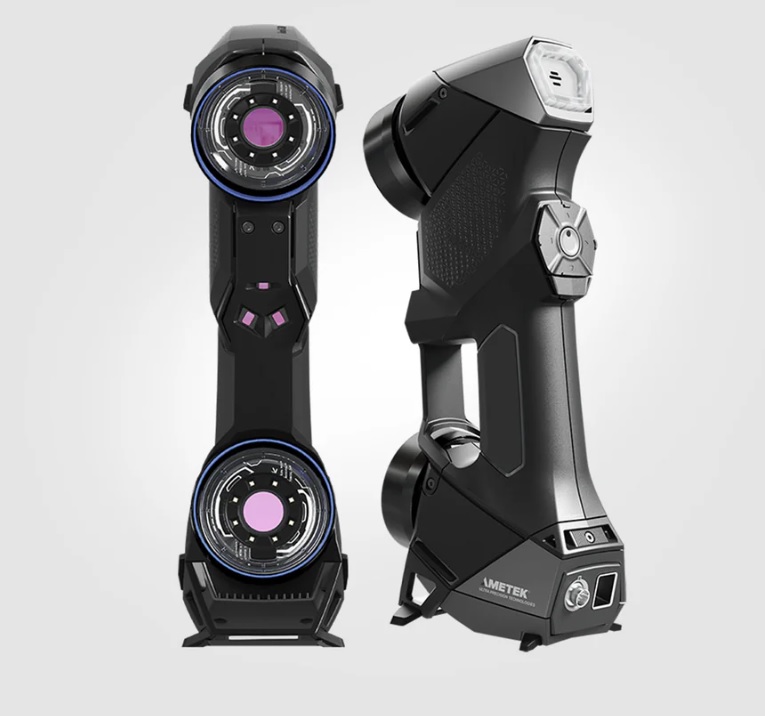
Best For:
Metrology inspection
Aerospace
Automotive
Manufacturing
Key Features
Metrology-grade accuracy
Portable handheld design
Excellent performance on complex geometries
High repeatability
Ideal for manufacturers requiring certified measurement accuracy.
- KSCAN-E Wireless 3D Scanner
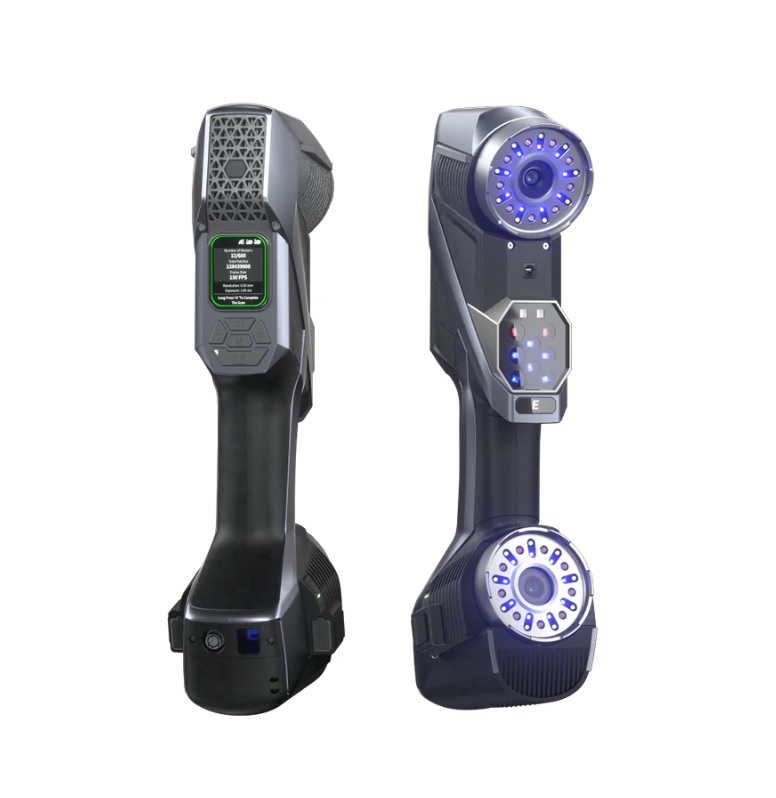
Best For
Large parts
Reverse engineering
Industrial inspection
Key Features
Large scanning area
High-speed laser scanning
Wireless operation
Hybrid scanning modes
Excellent choice for factories inspecting large components.
- ACE Skyline Wide 3D Scanner (Kreon)
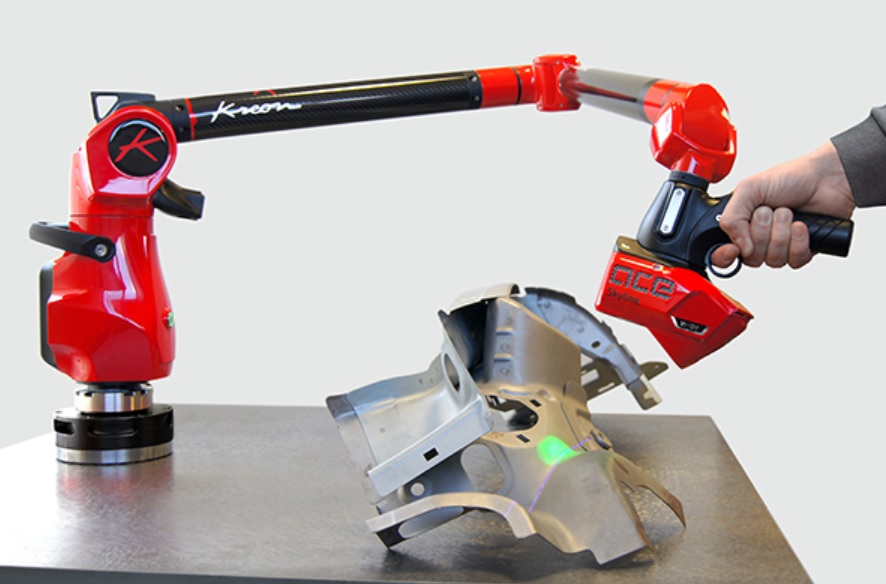
Best For
Coordinate measurement
Industrial metrology
Precision inspection
Key Features
Wide scanning line
High-speed acquisition
Excellent repeatability
Recommended for production quality control.
- Artec Leo

Best For
Portable scanning
Reverse engineering
Product development
Key Features
Wireless operation
Built-in touchscreen
Fast processing
High-resolution texture capture
Excellent for engineering and design teams.
- ZEISS T-SCAN hawk 2
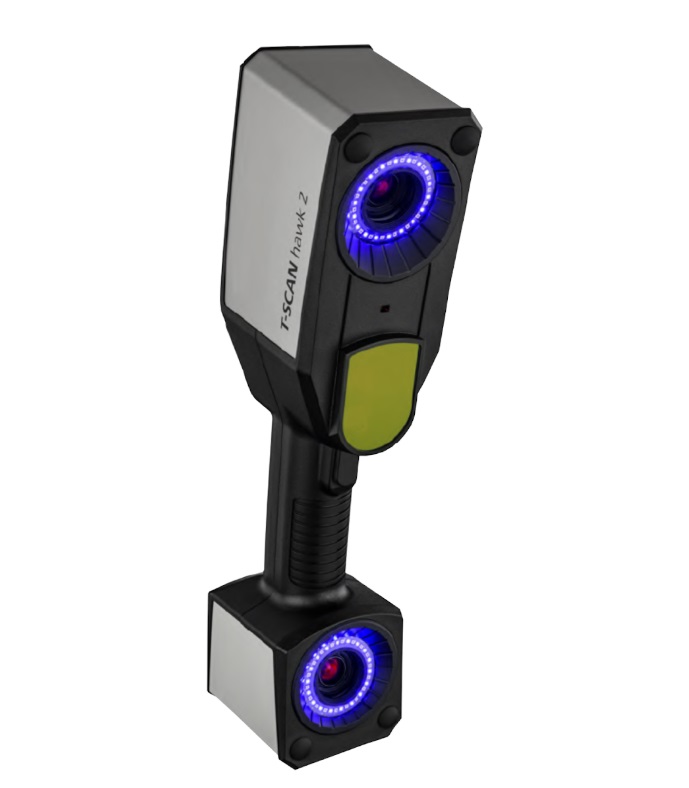
Best For
Precision manufacturing
Quality assurance
Complex geometry inspection
Key Features
Lightweight handheld scanner
Blue laser technology
High measurement accuracy
A premium solution for demanding industrial applications.
Which industrial 3D scanner is best for quality inspection?
Metrology-grade handheld scanners such as the Creaform HandySCAN BLACK Elite and ZEISS T-SCAN hawk 2 are excellent choices for precision dimensional inspection.
Which scanner is best for reverse engineering?
Portable laser and structured light scanners such as the KSCAN-E Wireless and Artec Leo provide fast, accurate data capture suitable for CAD reconstruction.
Are handheld 3D scanners accurate?
Yes. Professional industrial scanners can achieve accuracies suitable for demanding manufacturing, aerospace, and quality assurance applications.
Conclusion
Choosing the right industrial 3D scanner begins with understanding your inspection requirements, accuracy needs, scanning environment, and future business growth. Manufacturers seeking maximum productivity should prioritize metrology-grade accuracy, scanning speed, portability, and dependable software support.
Whether your business focuses on quality control, reverse engineering, or product development, investing in a professional industrial 3D scanner can reduce production costs, improve inspection efficiency, and deliver measurable long-term value.
Contact our team today to compare industrial 3D scanners and receive expert recommendations tailored to your application.